How Freight Factoring Works
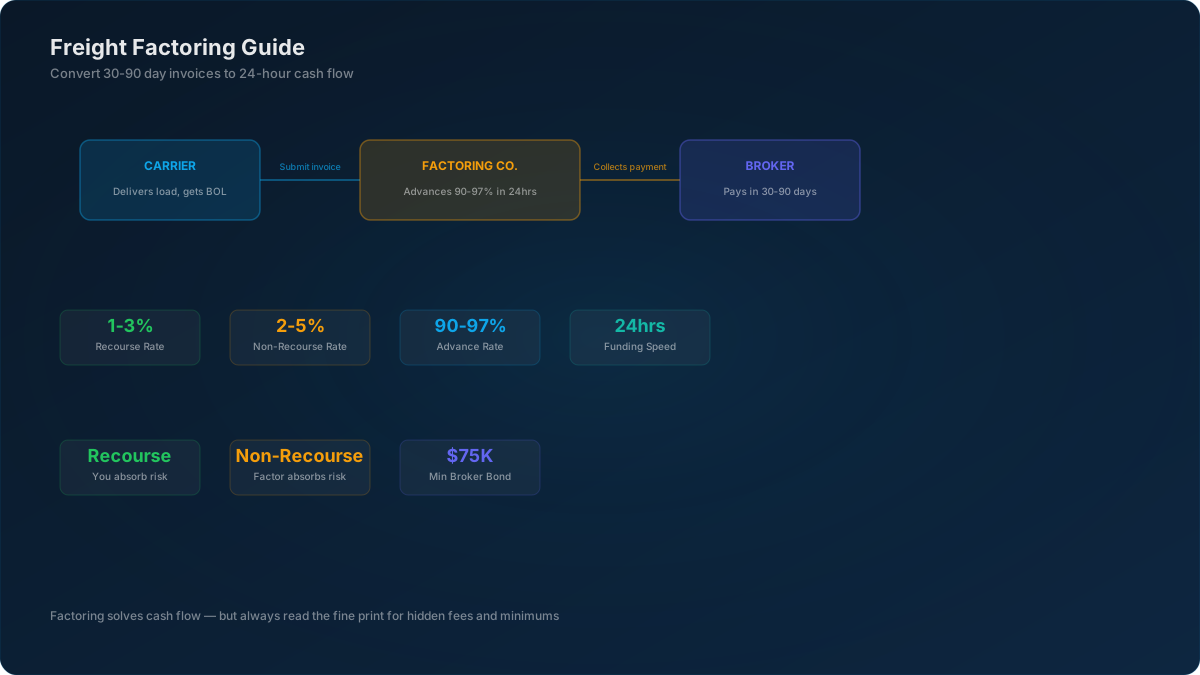
You deliver a load. The broker owes you $3,500. But their payment terms say "Net 30" — meaning you won't see that money for a month. Meanwhile, you need fuel, insurance is due next week, and your truck payment is in 10 days. This is the cash flow problem that freight factoring solves.
With factoring, you submit your invoice and proof of delivery to the factoring company. Within 24 hours (sometimes same-day), they advance you 90-97% of the invoice value. On that $3,500 load, you might receive $3,325-3,395 immediately. The factoring company then collects the full $3,500 from the broker and keeps the difference as their fee.
Recourse vs Non-Recourse Factoring
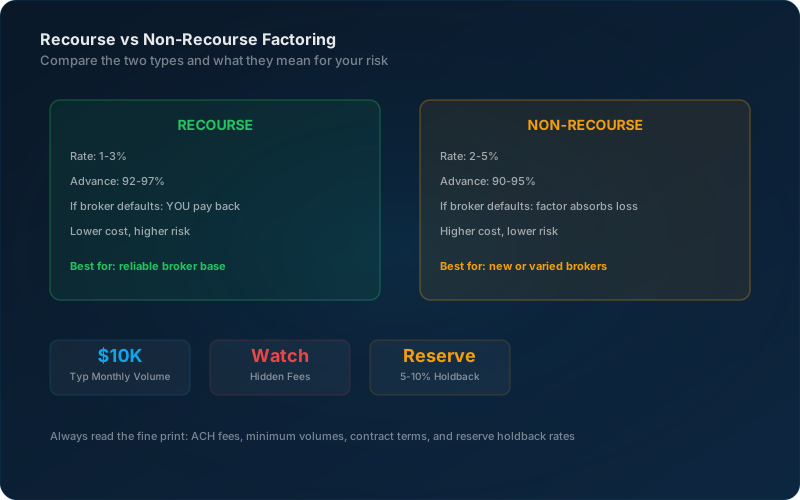
Recourse Factoring
1-3% fee
If the broker doesn't pay, you buy back the invoice. You carry the risk of non-payment.
Best for:
- ✓ Working with reliable, well-known brokers
- ✓ High-volume carriers wanting lowest rates
- ✓ Carriers who vet broker credit themselves
Non-Recourse Factoring
2-5% fee
The factoring company absorbs the loss if a broker defaults due to credit issues. You're protected from broker bankruptcies.
Best for:
- ✓ New carriers without broker relationships
- ✓ Carriers working with many different brokers
- ✓ Risk-averse operators wanting peace of mind
Important: "Non-recourse" typically only covers credit-related defaults (broker bankruptcy, insolvency). It usually does NOT cover disputes over freight damage, service issues, or double-brokered loads.
Hidden Fees to Watch For
The advertised factoring rate is often just the beginning. Many factoring companies add fees that significantly increase your effective cost:
- ⚠ACH/wire fees — $5-30 per transaction. On daily funding, this adds up fast.
- ⚠Monthly minimums — Requiring $10,000-50,000+ in minimum monthly factoring. Below the minimum, you pay a penalty.
- ⚠Invoice processing fees — $1-10 per invoice submitted, regardless of size.
- ⚠Credit check fees — Charging you for credit checks on brokers that should be included in the service.
- ⚠Termination fees — Charging a penalty for ending the relationship. Some charge $500-2,000+.
Always ask for a complete fee schedule in writing before signing. Calculate your total effective cost including all fees, not just the headline rate.
True Cost of Factoring at Different Volumes
Your effective factoring cost depends heavily on your monthly volume. Here's what factoring really costs at different revenue levels, assuming a 3% rate with typical additional fees:
| Monthly Revenue | Factor Fee (3%) | ACH/Other Fees | Total Cost | Effective Rate |
|---|---|---|---|---|
| $10,000 | $300 | $80 | $380 | 3.8% |
| $20,000 | $600 | $120 | $720 | 3.6% |
| $40,000 | $1,200 | $160 | $1,360 | 3.4% |
| $60,000 | $1,800 | $200 | $2,000 | 3.3% |
| $100,000 | $3,000 | $280 | $3,280 | 3.3% |
Estimates include typical ACH fees ($5-10/transaction), invoice processing ($2-5/invoice), and monthly account fees. Your actual costs will vary by provider.
Use our Cost Per Mile Calculator to factor in these costs when evaluating your all-in operating expenses.
How to Choose a Factoring Company
Not all factoring companies are created equal. Here are the key criteria to evaluate before signing:
Advance Rate
Look for 95%+ advance rates. Anything below 90% means you're leaving significant cash on the table. Top companies offer 97% advances for carriers with good track records.
Funding Speed
Same-day or next-day funding is standard. If a company takes 2-3 days to fund, look elsewhere. Some companies offer same-day ACH for loads submitted before noon.
Contract Terms
Avoid long-term contracts (12+ months) with hefty cancellation fees. The best factoring companies offer month-to-month or 30-day notice terms. If they need a 2-year contract to keep you, their service probably isn't good enough to retain you otherwise.
Minimum Volume Requirements
Some companies require $10,000-50,000+ monthly minimums. If you factor less, you pay a penalty. New carriers or part-time operators should look for companies with no minimums or low minimums ($5,000/month).
Fee Transparency
Ask for a complete written fee schedule. If the sales rep can't provide one immediately, that's a red flag. You want a clear breakdown of: factoring rate, ACH/wire fees, invoice processing fees, credit check fees, and any other charges.
Broker Credit Checks
Good factoring companies provide free broker credit checks. This protects you from booking loads with brokers who might not pay. DAT and Carrier411 are also useful tools for vetting brokers independently.
Factoring vs Other Cash Flow Options
Factoring isn't the only way to manage cash flow. Here's how it compares to other options available to trucking businesses:
| Option | Cost | Speed | Requirements |
|---|---|---|---|
| Freight Factoring | 1-5% per invoice | Same day - 24 hrs | Active MC, clean paperwork |
| Business Line of Credit | 8-24% APR | 2-4 weeks to open | Credit score 650+, 1+ year in business |
| Quick Pay (broker) | 1-3% deduction | 2-5 business days | Offered by select brokers only |
| Business Credit Card | 15-25% APR | Instant (if approved) | Personal credit score, collateral |
| Cash Reserves | $0 | Immediate | 2-3 months expenses saved |
Many experienced owner-operators start with factoring and transition to a business line of credit once they've built credit history and cash reserves. Others use a combination — factoring most invoices but using quick pay when brokers offer it at competitive rates.
When Factoring Makes Sense (and When It Doesn't)
Factoring Makes Sense When:
- • You're a new carrier with limited cash reserves
- • Brokers pay on Net 30-90 terms
- • You need predictable cash flow for payments
- • You're growing and need fuel/operating capital
- • The cost is less than a bank line of credit
You May Not Need Factoring When:
- • You have 2-3 months of expenses in reserves
- • Most of your brokers pay within 15-20 days
- • You have a business line of credit with lower rates
- • You work primarily with quick-pay brokers
- • Your monthly volume is below $5,000 (fees eat margins)
Related Resources
- How Truck Dispatch Works — Learn how dispatch and factoring work together
- Our Pricing — Transparent dispatch fees with no hidden charges
- DAT — Check broker credit scores before booking loads
- New Authority Checklist — Setting up factoring as a new carrier
- How to Start a Trucking Business — Complete startup guide including cash flow planning
- New Authority Dispatch Guide — Getting started with dispatch as a new carrier
- Factoring vs Quick Pay — Comparing the two fastest ways to get paid on loads
- Trucking Bookkeeping Guide — Keep your books clean and your factoring company happy
Truck Dispatch Experts
Published Apr 12, 2025 · Updated Mar 3, 2026