What Is Truck Dispatching?
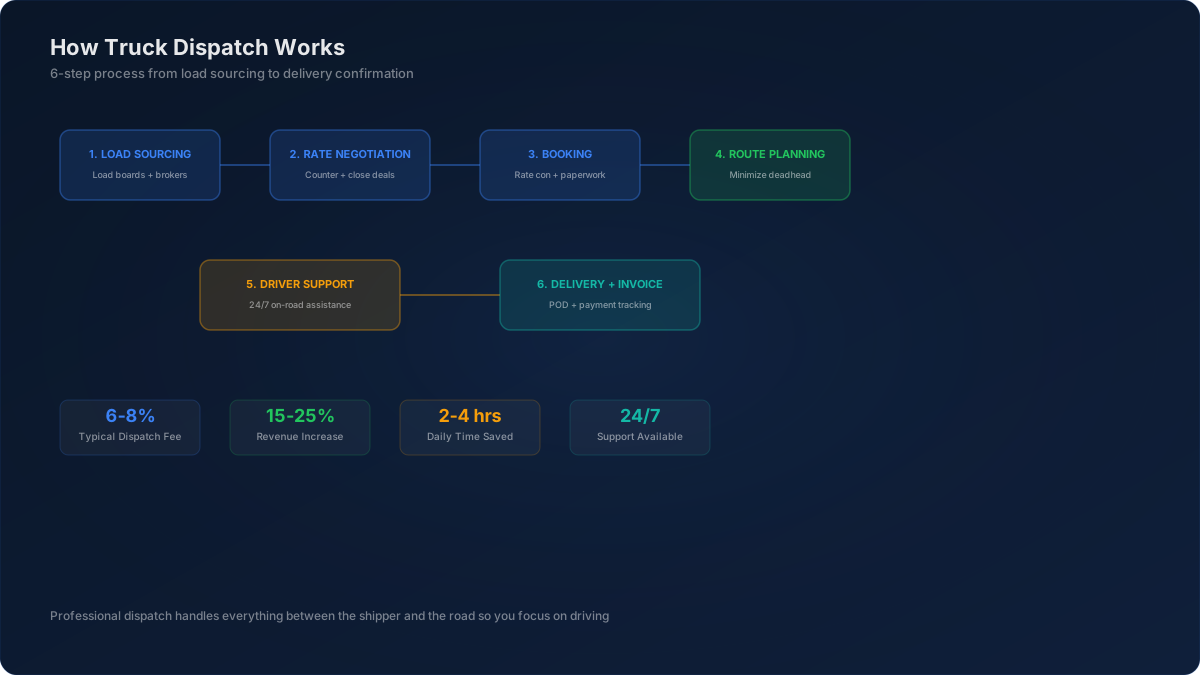
Truck dispatching is the process of finding, booking, and managing freight loads for carriers. A professional dispatcher acts as the bridge between the carrier (you) and the freight market — handling load sourcing, rate negotiation, paperwork, and operational support so you can focus on driving.
Think of a dispatcher as your business partner on the operations side. While you handle the driving and equipment, they handle everything else that makes your truck profitable: finding the right loads, getting the best rates, ensuring you're not running empty, and keeping paperwork organized.
For owner-operators and small fleets, professional dispatch is often the difference between surviving and thriving. The carriers who consistently earn $250,000+ per year almost always have strong dispatch support — either in-house or through a service like ours.
What a Truck Dispatcher Does Every Day
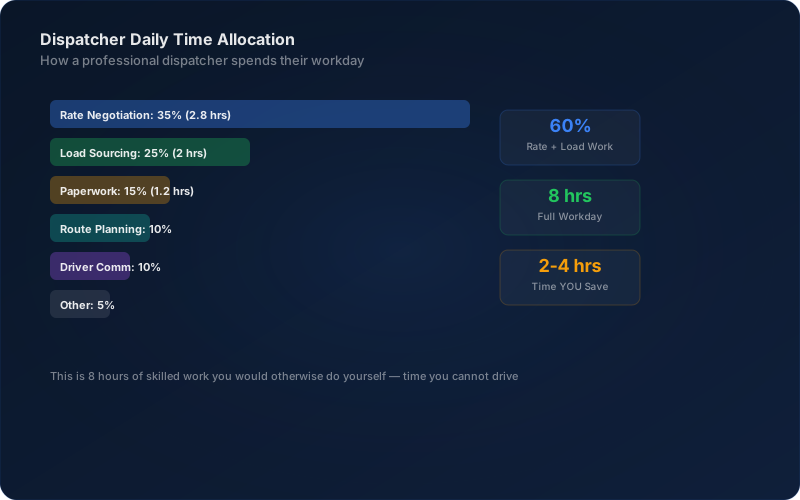
A professional dispatcher's work breaks down into five core areas. Understanding each helps you evaluate what you're getting for your dispatch percentage.
Load Sourcing & Selection
Dispatchers search load boards (DAT, Truckstop, 123Loadboard), check direct shipper contracts, and leverage broker relationships to find available freight. But the real skill isn't finding loads — it's finding the RIGHT loads. Your dispatcher evaluates each option based on rate per mile, deadhead distance, delivery timeline, and how the load positions you for your next pickup.
Rate Negotiation
This is where dispatchers earn their percentage. They negotiate with brokers and shippers to get the highest possible rate for each load. An experienced dispatcher knows the market rate for every lane and won't accept below-market offers. They also understand when to hold out for better rates and when market conditions favor booking quickly.
Paperwork & Documentation
Rate confirmations, bills of lading (BOLs), proof of delivery (PODs), insurance certificates, and invoicing — the paperwork never stops. Your dispatcher handles all of this, ensuring documents are accurate, submitted on time, and organized for your records. This alone saves most carriers 8-12 hours per week.
Route Planning & Optimization
Dispatchers don't just find loads — they plan your entire week. They consider fuel costs along different routes, truck stop locations, HOS (Hours of Service) compliance windows, and how each delivery positions you for the next pickup. The goal: maximize loaded miles while minimizing deadhead and downtime.
24/7 On-Road Support
Problems happen: detention at shippers, weather delays, equipment issues, broker disputes. Your dispatcher is your first call. They handle rebooking, negotiate detention pay, communicate with brokers and receivers, and keep your schedule on track even when things go wrong.
Dispatch Service vs. Self-Dispatching
Many owner-operators start by self-dispatching — searching load boards themselves, calling brokers, and handling their own paperwork. It saves the dispatch percentage, but it costs something more valuable: time and earning potential.
Self-dispatching typically takes 2-4 hours per day. That's 2-4 hours you're not driving, not earning revenue, and not resting. Most carriers who switch to professional dispatch report earning 15-25% more gross revenue — far exceeding the 6-8% dispatch fee.
The math is straightforward: if you gross $15,000/month self-dispatching and a professional dispatcher helps you gross $18,000/month, the 6% fee ($1,080) costs you far less than the $3,000 in additional revenue you're earning. For a deeper comparison, see our Dispatch vs. Self-Dispatch guide.
How to Get Started with a Dispatch Service
Getting set up with professional dispatch is simpler than most carriers expect. Here's what you'll need:
- MC Authority — Your motor carrier operating authority from the FMCSA
- Insurance Certificates — Current liability and cargo insurance
- Equipment Details — Truck and trailer type, capacity, and any special capabilities
- Preferred Lanes — Where you like to run and any areas you want to avoid
- Rate Expectations — Your minimum acceptable rate per mile
At Truck Dispatch Experts, we can have you dispatched within 24-48 hours of receiving your paperwork. No long-term contracts — work with us as long as it makes you money. Visit our Get Started page to begin.
What Makes a Good Dispatch Service
Not all dispatch services are created equal. Here are the hallmarks of a quality operation:
Equipment Specialization
Dispatchers who specialize in your trailer type understand the freight, rates, and lanes specific to your equipment.
Transparent Pricing
Clear percentage with no hidden fees. You should know exactly what you're paying and what you're getting.
No Long-Term Contracts
Confident services don't lock you in. If they're doing a good job, you'll stay because you want to.
24/7 Availability
Freight doesn't respect business hours. Your dispatcher should be available when you need them.
For a deeper dive into evaluating dispatch companies, read our How to Choose a Dispatch Company guide.
A Day in the Life: How Your Dispatcher Works for You
Dispatch isn't a 9-to-5 job — it's a continuous cycle of finding freight, negotiating rates, and keeping you moving. Here's what a typical day looks like behind the scenes so you can see exactly where your dispatch percentage goes.
Market Review & Load Sourcing
Your dispatcher starts early — reviewing overnight load postings on DAT, Truckstop, and 123Loadboard. They check spot market conditions, fuel price changes, and any weather or road closures that could affect your lanes. By the time you're finishing your pre-trip inspection, they've already identified the best available freight for your location and equipment.
Load Options & Driver Communication
Your dispatcher contacts you with curated load options — not just any load, but the ones that match your equipment, preferred lanes, and rate minimums. They present the rate per mile, pickup/delivery locations and times, commodity details, and how each load positions you for follow-up freight. You pick what works; they handle the rest.
Rate Negotiation & Booking
Once you've selected a load, your dispatcher negotiates the final rate with the broker or shipper. They push for every dollar — referencing lane averages, fuel surcharges, and market conditions. After agreeing on a rate, they book the load, send you the rate confirmation, and verify pickup instructions so there are no surprises at the shipper.
Monitoring & On-Road Support
While you're driving, your dispatcher monitors your delivery progress, handles any check calls from the broker, and troubleshoots problems in real time — detention at a shipper, address discrepancies, lumper fee disputes, or appointment reschedules. They're also already scanning the market for your next load, building a plan so you don't sit empty after delivery.
Next-Day Freight & Return Loads
As the afternoon progresses, your dispatcher shifts focus to next-day planning. They search for freight that picks up near your current delivery, set up return loads to keep you moving toward home or profitable lanes, and lock in bookings before the evening when load board inventory thins out. This proactive planning is what prevents deadhead miles.
Issue Resolution & Plan Confirmation
Before the day ends, your dispatcher confirms the next-day plan with you — pickup times, addresses, and any special requirements. They handle any lingering delivery issues, file paperwork (rate cons, BOLs, PODs), and update your schedule. If something goes wrong on a late delivery, they're reachable to rebook or adjust the plan.
How Dispatch Differs by Equipment Type
Dispatching isn't one-size-fits-all. The freight market, rate dynamics, and operational requirements vary significantly across equipment types. A dispatcher who specializes in your trailer type understands these nuances — and that specialization directly impacts your revenue.
Dry Van
Dry van dispatching is a volume game. With the most available freight of any equipment type, the challenge isn't finding loads — it's finding the right loads. Dispatchers focus on lane optimization, building consistent round-trip routes that minimize deadhead and maximize loaded miles per week. They leverage high-volume lanes where rate competition benefits carriers and avoid oversaturated markets.
Reefer
Reefer dispatch requires temperature-sensitive expertise. Dispatchers must verify temperature requirements for every load, coordinate tight appointment windows at cold storage facilities, and understand produce season timing — when California, Florida, and Texas harvests create premium-rate freight surges. Reefer rates are typically 15-25% higher than dry van, but the operational complexity demands specialized knowledge.
Flatbed
Flatbed dispatching involves navigating permits, load dimensions, and securement requirements. Your dispatcher coordinates oversize/overweight permits when needed, verifies that load dimensions match your trailer capacity, and factors in tarping time and requirements. They also understand seasonal construction and industrial freight cycles that drive flatbed demand — and position you in the right markets at the right time.
Hotshot
Hotshot dispatching centers on expedited matching and flexibility. Dispatchers source time-sensitive freight where speed commands premium rates, handle the unique considerations of non-CDL operations (weight limits, equipment restrictions), and find loads that fit smaller trailer capacities. They also tap into oilfield, construction, and agricultural niches where hotshot demand is strongest.
For detailed information on each equipment type, visit our dispatch services page or explore individual equipment pages above.
Technology Behind Modern Dispatch
Professional dispatch has evolved far beyond phone calls and fax machines. Today's dispatchers leverage a suite of technology tools that give them — and by extension, you — a significant competitive advantage. Here's what powers a modern dispatch operation:
- Load Boards (DAT, Truckstop, 123Loadboard) — Digital freight marketplaces where brokers and shippers post available loads. Professional dispatchers maintain subscriptions to multiple boards simultaneously, giving them access to the widest possible pool of freight. They also use board-specific features like rate history and carrier reviews to vet brokers before booking.
- Rate Analytics & Market Intelligence — Tools like DAT RateView and Truckstop Rate Analysis provide real-time and historical rate data for every lane in the country. Dispatchers use this data to benchmark offers against market averages, identify underpriced loads, and time negotiations for maximum leverage.
- TMS (Transportation Management Systems) — Software that tracks loads from booking through delivery and payment. A TMS manages rate confirmations, BOLs, invoicing, and carrier settlements in one platform — reducing paperwork errors and speeding up payment cycles.
- Communication Platforms — Dispatch teams use dedicated communication tools (phone, text, email, and fleet messaging apps) to stay in constant contact with drivers, brokers, and shippers. Quick response times on check calls and issue resolution keep loads on schedule and relationships strong.
- GPS & ELD Integration — Real-time truck location data from GPS units and Electronic Logging Devices allows dispatchers to monitor delivery progress, provide accurate ETAs to brokers, plan next loads based on your actual position, and ensure HOS compliance before booking time-sensitive freight.
The combination of these tools means your dispatcher has a real-time, data-driven view of the entire freight market — something no individual owner-operator can replicate while also driving 500+ miles a day.
Related Resources
- Dispatch vs. Self-Dispatch — Detailed comparison with revenue math
- Rate Negotiation Tips — How dispatchers get you higher rates
- DAT Load Board — Industry-leading freight marketplace
- Truckstop — Load board and rate analytics platform
- Dispatch Fees Explained — What dispatch fees cover and how they work
- How to Become a Truck Dispatcher — Steps to start a career in truck dispatching
Truck Dispatch Experts
Published Jan 15, 2025 · Updated Mar 3, 2026