The Freight Market: Recovery Mode
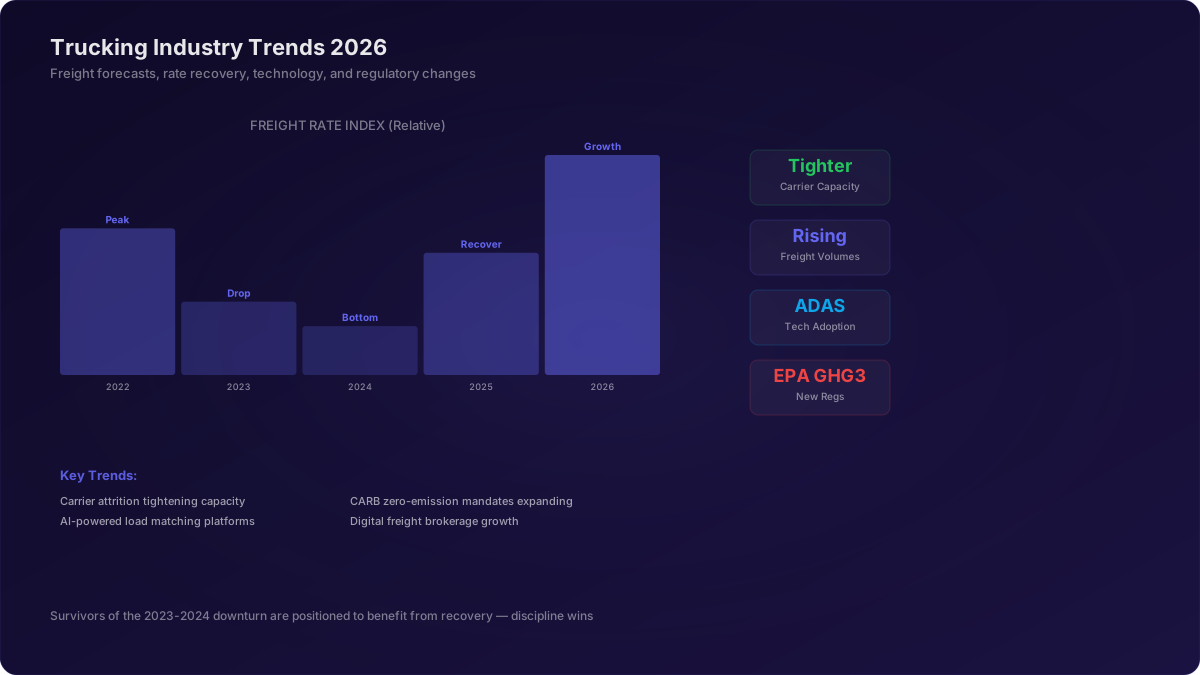
The trucking industry enters 2026 in a different position than it was a year ago. The prolonged freight recession that began in late 2022 pushed thousands of carriers out of business — the FMCSA reported a net loss of over 88,000 carrier authorities in 2023-2024 combined. That capacity reduction is now starting to rebalance the market.
Freight volumes are showing signs of stabilization. Consumer spending, while not booming, has remained resilient. Manufacturing activity is mixed but trending upward in key sectors like automotive and construction. E-commerce continues its steady growth trajectory at 12-15% annually, supporting consistent demand for parcel and LTL carriers.
The American Trucking Associations (ATA) projects total freight tonnage to grow 2.4% in 2026, driven primarily by consumer goods, construction materials from infrastructure projects, and the ongoing shift of manufacturing back to North America. Meanwhile, truck utilization rates are climbing back toward the 90%+ levels that typically precede meaningful rate increases.
For owner-operators and small fleets, the key takeaway: the operators who survived the downturn are now in a stronger competitive position. Less capacity means more negotiating power on rates — if you know how to use it. This is where having a skilled dispatcher becomes a genuine competitive advantage rather than just a convenience.
Rate Trends by Equipment Type
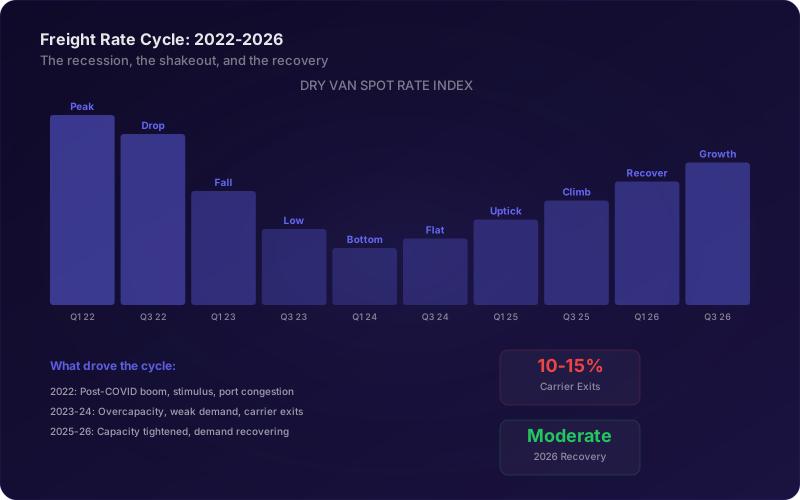
Rate recovery isn't uniform across all equipment types. Here's what we're seeing in 2026:
Dry Van
Moderate recovery
Spot rates recovering from 2024 lows. Contract rates stabilizing. Lane-specific variation is significant — strong corridors like Southeast to Northeast are outperforming.
Reefer
Strong demand
Temperature-controlled freight continues to command premiums. Produce season creates predictable surges. Carrier attrition hit reefer hard, tightening capacity significantly.
Flatbed
Infrastructure boost
Federal infrastructure spending is driving demand for construction materials, steel, and equipment. Flatbed rates are among the strongest in the market.
Specialized/Heavy Haul
Premium and stable
Specialized equipment consistently commands premium rates due to limited carrier supply. Energy sector and infrastructure projects are primary drivers.
| Equipment | 2024 Avg $/mi | 2026 Avg $/mi | Change |
|---|---|---|---|
| Dry Van | $2.10-2.45 | $2.35-2.80 | +8-12% |
| Reefer | $2.40-2.90 | $2.75-3.40 | +10-15% |
| Flatbed | $2.50-3.10 | $2.85-3.50 | +12-18% |
| Step Deck | $2.80-3.40 | $3.10-3.80 | +10-15% |
| Heavy Haul | $4.00-8.00+ | $4.50-9.00+ | +10-15% |
| Hotshot | $1.80-2.50 | $2.00-2.80 | +8-12% |
Rates are national averages for linehaul miles. Actual rates vary significantly by lane, season, and load specifics. Source: Industry rate data aggregated from DAT Trendlines and market reports.
See current rate ranges for all equipment types on our Services page, or use our Rate Per Mile Calculator to evaluate specific loads.
Technology Trends Reshaping Trucking
AI-Powered Load Matching
Platforms like DAT and Truckstop are integrating AI to predict optimal loads based on carrier preferences, historical performance, and market conditions. Professional dispatchers combine this technology with human judgment and relationship knowledge.
Predictive Maintenance
Telematics and sensor data are enabling maintenance predictions before breakdowns occur. Fleets using predictive maintenance report 20-30% reduction in unplanned downtime — directly improving revenue.
Digital Freight Platforms
The line between traditional brokerage and digital platforms continues to blur. Convoy's acquisition by Flexport signaled industry consolidation. Carriers benefit from more options and greater transparency in pricing.
Real-Time Freight Visibility
Shippers and brokers increasingly require real-time load tracking. Most ELD providers now offer integrated tracking. This trend benefits reliable carriers — visibility builds trust and leads to preferred carrier status.
Regulatory Changes to Watch
2026 brings several regulatory shifts that will directly affect carrier operations and costs. Staying ahead of these changes is essential for compliance and profitability.
EPA Greenhouse Gas Phase 3 Standards
New emissions standards for medium- and heavy-duty trucks take effect for model year 2027 vehicles, meaning trucks ordered in late 2026 will be affected. Expect higher sticker prices ($5,000-15,000 more) for compliant engines, but lower fuel costs over the vehicle's lifetime. Owner-operators buying used equipment may find a price advantage as fleets accelerate trade-in cycles.
California Advanced Clean Trucks
California's ACT rule requires increasing percentages of zero-emission truck sales. While this directly affects manufacturers, it impacts carriers operating in California through infrastructure changes, potential incentive programs, and long-term equipment planning. Other states (Oregon, Washington, New York, New Jersey) are adopting similar rules.
Speed Limiter Mandate
FMCSA's speed limiter rule remains under consideration. If enacted, it would require trucks manufactured after a certain date to have speed limiters set between 60-68 mph. While controversial, carriers should plan routes accounting for potential speed restrictions on heavy trucks.
FMCSA Safety Fitness Determination
FMCSA continues reforming how carrier safety ratings are determined, moving toward a more data-driven system based on CSA scores rather than infrequent on-site audits. Carriers with poor CSA scores face increasing scrutiny and potential insurance rate impacts. Keep your score clean — it directly affects your bottom line.
Drug & Alcohol Testing Updates
The FMCSA Drug & Alcohol Clearinghouse now has over 200,000 drivers with violations on record. Pre-employment queries are mandatory, and the industry is watching for potential expansion to hair follicle testing alongside urinalysis. Carriers who maintain clean records have a competitive advantage.
The Driver Shortage: What It Means for Rates
The ATA estimates a shortage of roughly 60,000 truck drivers in 2026. While the freight recession temporarily eased the shortage as load volumes dropped, the structural factors driving it remain unchanged: an aging workforce (average driver age is 57), lifestyle challenges, and insufficient new entrants.
For owner-operators, this is fundamentally positive. Fewer drivers means less competition for available loads and upward pressure on rates. The shortage is most acute in specialized segments — tanker, hazmat, and oversized loads — where additional training and endorsements create higher barriers to entry.
Carriers who can offer reliability, compliance, and professional operations are increasingly valued by brokers and shippers. A clean safety record, on-time delivery history, and consistent capacity make you the carrier that gets called first when premium loads come available.
The shortage also creates opportunity for small fleets. If you're considering starting a trucking business, the demand fundamentals are in your favor — there are more loads than trucks to move them.
Regional Market Outlook
Freight recovery varies significantly by region. Understanding where the strongest markets are helps carriers and dispatchers position trucks for maximum earnings.
Southeast
StrongPopulation growth, port expansion (Savannah, Charleston), and nearshoring manufacturing create robust demand. I-85 and I-95 corridors remain among the highest-volume lanes in the country.
Read full regional guide →Texas & South Central
Very StrongEnergy sector recovery, cross-border trade growth, and continued population inflow keep Texas as the #1 freight state. DFW and Houston are freight magnets.
Read full regional guide →Midwest
ModerateManufacturing activity in the auto belt is recovering but slowly. Agricultural freight remains seasonal but reliable. Chicago-area freight is always strong.
Read full regional guide →Northeast
SteadyDense consumer markets ensure consistent demand. Port of New York/New Jersey expansion adds capacity. Tight roads and congestion keep rates elevated.
Read full regional guide →West Coast
MixedPort volumes are recovering from the 2023 diversions. California regulatory costs push some carriers to other states. Los Angeles and Inland Empire remain massive freight generators.
Read full regional guide →Mountain & Plains
GrowingInfrastructure projects, energy development, and data center construction in states like Utah, Colorado, and Idaho are creating new freight opportunities.
Read full regional guide →Strategies for Carrier Profitability in 2026
The carriers who thrive in 2026 will share these characteristics:
- Know your numbers — Use our Cost Per Mile Calculator to know your exact breakeven. Never book below it.
- Minimize deadhead — Target under 10% empty miles. Use our Deadhead Calculator to evaluate every load before committing.
- Build lane expertise — Specialize in 3-5 profitable lanes rather than chasing loads everywhere. Consistency builds broker relationships and market knowledge.
- Invest in relationships — Direct shipper relationships and preferred carrier status with brokers lead to consistent, high-paying freight.
- Leverage professional dispatch — A good dispatcher pays for themselves many times over through better rates, less deadhead, and time savings.
Industry Resources
- American Trucking Associations (ATA) — Industry data, advocacy, and research
- Bureau of Transportation Statistics — Federal freight data and transportation analysis
- Rate Negotiation Tips — Maximize your rates as the market recovers
- Dispatch vs. Self-Dispatch — Compare your options for 2026
- 2026 Industry Forecast — Detailed freight volume and rate predictions for the year ahead
- Highest Paying Trucking Jobs — Top-earning positions and equipment types in 2026
Truck Dispatch Experts
Published Jan 5, 2026 · Updated Mar 3, 2026